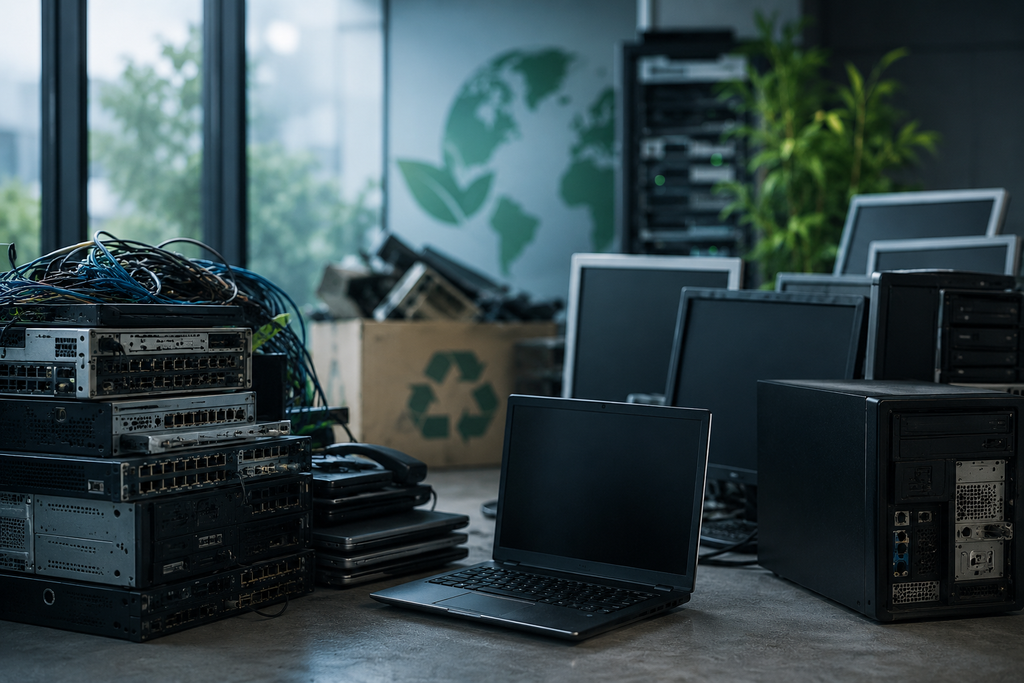
Most businesses do not think much about old IT equipment until it starts becoming impossible to ignore. It usually begins slowly. A few retired laptops sit in storage after a hardware refresh. Old switches remain mounted in a rack after a network upgrade. Servers get replaced but never fully removed from inventory. Over time, unused equipment starts occupying office space, storage rooms, and warehouses without anyone having a clear plan for what happens next.
At first, it does not feel urgent.
Then years pass.
Many companies today are sitting on large amounts of unused IT equipment without realizing how expensive and inefficient that situation eventually becomes.
Old Hardware Creates Problems Quietly
One reason this issue is often ignored is because old equipment does not immediately interrupt operations. Unlike an active system failure, retired hardware quietly accumulates in the background.
The problem is that businesses still pay for that equipment indirectly through:
- storage space
- inventory management
- operational clutter
- transportation
- internal labor
- security concerns
The larger the company becomes, the harder it is to track everything properly. This is becoming a growing issue in overall retired hardware management, especially as companies continue upgrading infrastructure faster than ever before.
Technology Moves Faster Than Storage Rooms
Most enterprise hardware is not retired because it completely stops working. In many cases, equipment is replaced because technology standards evolve quickly.
New processors, cloud infrastructure, AI workloads, networking requirements, and cybersecurity standards constantly push businesses toward newer systems. Hardware that was considered modern only a few years ago can suddenly feel outdated inside production environments.
That creates a cycle where businesses continuously replace:
- servers
- networking equipment
- desktops
- monitors
- telecom hardware
- accessories
- storage systems
The problem is that very few organizations build a long term strategy for handling the old equipment afterward.
According to the Global E Waste Monitor 2024, the world generated 62 million metric tons of electronic waste in 2022. The report also projects that global e waste could reach 82 million metric tons annually by 2030.
Much of that growth comes from shorter technology replacement cycles and poor lifecycle planning.
Storage Costs More Than Most Businesses Realize
Many companies assume keeping old equipment in storage is harmless.
In reality, storing large amounts of retired hardware creates long term operational inefficiencies that often go unnoticed because they are spread across departments and budgets.
Unused equipment occupies:
- office space
- warehouse shelving
- server room capacity
- storage containers
- transportation resources
Internal IT teams also spend time organizing, tracking, moving, and managing equipment that no longer supports daily business operations.
For some businesses, old hardware becomes a permanent “temporary project” nobody wants to deal with.
Security and Compliance Risks Continue After Equipment Is Retired
One of the biggest misconceptions around old IT equipment problems is assuming devices stop creating risk once they leave active use.
That is not always true.
Retired devices may still contain:
- sensitive company data
- customer information
- login credentials
- stored backups
- internal documentation
According to the National Institute of Standards and Technology (NIST), organizations should follow proper media sanitization processes before disposing of or reusing electronic devices.
Without proper lifecycle management, forgotten equipment can become both a security and compliance issue.
Businesses Are Starting To Think Differently About IT Lifecycle Management
As sustainability expectations grow, companies are beginning to rethink how they manage technology from procurement to retirement.
This shift is not only about environmental responsibility. Businesses are also realizing that unmanaged hardware creates operational inefficiencies, hidden costs, and unnecessary waste.
Organizations already working with global IT lifecycle providers like Dragon Sino are increasingly paying attention to what happens after equipment leaves production environments. More companies now understand that IT lifecycle management does not end with deployment. It also includes refurbishment, reuse, responsible retirement, and long term sustainability planning.
That broader view is becoming increasingly important as infrastructure environments continue evolving faster every year.
Old Equipment Still Has Value
One of the biggest mistakes businesses make is assuming old equipment automatically becomes worthless.
In many cases, retired hardware still has usable life left. Servers, switches, monitors, networking equipment, accessories, and enterprise devices may no longer fit one company’s infrastructure while still remaining useful somewhere else.
The real problem is usually not the equipment itself.
The problem is the lack of a clear strategy.
That is why more businesses are now exploring:
- sustainable IT disposal
- refurbishment
- lifecycle management
- responsible recycling
- technology reuse
- donation programs
Not every device should be resold. Not every device should be recycled immediately either.
The important thing is building a smarter process before unused equipment becomes a larger operational problem.
A Smarter Path for Retired Technology
Every business eventually faces the same question: What should happen to retired IT equipment once it is no longer needed internally?
For many companies, reselling creates limited returns while equipment continues losing value over time. Donation offers a different approach. Instead of sitting unused in storage or moving through low value secondary markets, retired hardware can continue serving a real purpose.
Servers, switches, networking equipment, monitors, accessories, and other enterprise devices still have the ability to support schools and educational programs that lack reliable technology infrastructure.
At Tech On Hand, we help businesses extend the life of retired technology through refurbishment, responsible deployment, and educational reuse across Africa.
Because sustainable IT management is not only about removing old equipment.
It is about making sure valuable technology continues creating impact long after it leaves your environment.
Continue Reading
What Companies Do With Retired Hardware
Laptop Donation Program for Students: How It Works and How to Get Involved
A Laptop, A Classroom, A Future: Why We Started Tech On Hand